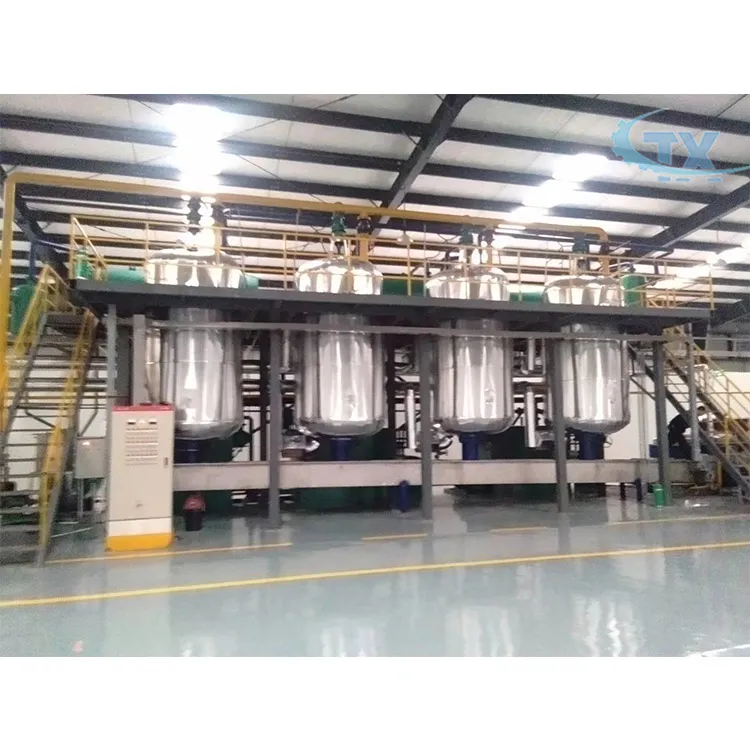
In response to evolving global demand and stricter environmental regulations, the edible oil industry is rapidly transforming. The emergence of advanced, energy-efficient processing equipment has become pivotal for manufacturers looking to meet higher standards of food safety, oil purity, and sustainability. Ziya Group’s fully automated peanut oil production line exemplifies this trend, integrating innovative technologies to optimize extraction, refining, and control processes — thereby empowering food producers and traders worldwide to scale operations with greater efficiency and reliability.
The global edible oil market has expanded at an annual rate of approximately 4.5%, with peanut oil gaining notable traction due to its desirable nutritional profile and culinary versatility. Parallel to this growth is a mounting emphasis on green manufacturing and sustainability. Recent industry reports indicate that equipment energy consumption accounts for nearly 25% of total production costs in traditional peanut oil processing—a critical target for cost reduction and carbon footprint mitigation.
Environmental standards across key markets such as the EU, North America, and Southeast Asia are driving demand for low-emission, resource-conserving machinery. Consequently, the adoption of intelligent, energy-saving technologies not only aligns with regulatory requirements but also delivers measurable improvements in operational expenditures.
Ziya Group’s automated peanut oil production line incorporates a sophisticated blend of cold-press and hot-press technologies to enhance oil yield and quality. The cold-pressing module preserves essential fatty acids and natural antioxidants, while the hot-pressing stage maximizes extraction efficiency. This dual-mode approach achieves an oil purity exceeding 99.5%, according to internal quality assessments.
Complementing the mechanical design is an advanced intelligent control system that leverages IoT sensors and real-time data analytics. This system precisely regulates parameters such as temperature, pressure, and throughput speed, ensuring optimal process stability and consistent product quality with minimal human intervention—reducing labor needs by up to 40%, as evidenced in large-scale facilities.
The refinement process integrates eco-friendly degumming, bleaching, and deodorization units engineered to minimize chemical usage and waste generation. Enhanced filtration and contaminant removal techniques comply fully with international food safety certifications, including ISO 22000 and HACCP standards.
Energy consumption benchmarks show up to 30% reduction compared to conventional peanut oil production lines, largely attributed to optimized thermal recovery and vacuum systems. This not only decreases environmental impact but also shortens production cycles, delivering faster turnaround times for manufacturers.
Case studies illustrate the production line’s versatility: a multinational agricultural enterprise reported a 25% increase in extraction yield alongside a 15% decrease in operational costs following installation; meanwhile, a medium-sized regional oil mill successfully scaled up output while maintaining food safety compliance, gaining access to export markets with stringent quality requirements.
International trade companies have leveraged the system’s consistent product purity to build stronger buyer trust, improving contract acquisition rates by approximately 20%. These documented outcomes reinforce the equipment’s role as a catalyst for industry modernization.
The design philosophy of the Ziya Group production line reflects a commitment to green manufacturing. Use of recyclable materials, modular component architecture for easier upgrades, and energy management software underscore a holistic approach to sustainability throughout the equipment lifecycle.
Looking ahead, integration with AI-driven predictive maintenance and blockchain traceability promises further leaps in operational transparency and quality assurance — key factors fueling buyers’ confidence in an increasingly competitive global market.
To amplify reach, content marketing efforts should focus on data-rich blog articles, infographics illustrating energy savings and process efficiency, and insightful video interviews with industry experts. Employing targeted SEO keywords such as “energy-efficient peanut oil equipment,” “automated oil refining technology,” and “food safety in edible oil production” will enhance search engine visibility and lead generation.
By combining technical depth with accessible language, marketers can engage both technical decision-makers and broader industry stakeholders, fostering meaningful commercial dialogues.
 457
|
457
|
 Intelligent control system
Peanut oil press
Automated production
Energy conservation
ISO9001 quality certification
476
|
Peanut oil press intelligent control
Low - energy consumption pressing equipment
Automated production control
ISO9001 quality certification
Southeast Asian market peanut oil equipment
35
|
Peanut oil press selection
Energy - efficient peanut oil press maintenance
High - efficiency press technical parameters
Agricultural cooperative oil - making equipment
Intelligent energy - saving peanut oil press
195
|
peanut oil press machine energy efficiency
low energy oil extraction equipment
export oil press machine
agricultural cooperative oil processing
energy-saving oil pressing technology
198
|
peanut oil press automation
smart oil extraction control
low energy oil pressing machine
African oil processing solutions
Southeast Asian food processing automation
Intelligent control system
Peanut oil press
Automated production
Energy conservation
ISO9001 quality certification
476
|
Peanut oil press intelligent control
Low - energy consumption pressing equipment
Automated production control
ISO9001 quality certification
Southeast Asian market peanut oil equipment
35
|
Peanut oil press selection
Energy - efficient peanut oil press maintenance
High - efficiency press technical parameters
Agricultural cooperative oil - making equipment
Intelligent energy - saving peanut oil press
195
|
peanut oil press machine energy efficiency
low energy oil extraction equipment
export oil press machine
agricultural cooperative oil processing
energy-saving oil pressing technology
198
|
peanut oil press automation
smart oil extraction control
low energy oil pressing machine
African oil processing solutions
Southeast Asian food processing automation