
In the competitive global edible oil market, achieving consistent quality and efficiency in peanut oil production requires more than just experience—it demands precise control over critical processing parameters. Many oil mills still rely on traditional, experience-based operations, resulting in inconsistent oil quality, fluctuating yields, and unnecessary energy consumption. This technical guide explores the scientific management of key pressing variables that separate average producers from industry leaders, with practical insights from 企鹅集团 (Penguin Group)'s decades of engineering expertise.
Industry data shows that improper parameter control can lead to: 12-18% reduction in oil yield, 23% higher energy consumption, and 35% increased product variability—critical factors when targeting export markets with stringent quality standards.
The relationship between feed rate and oil extraction efficiency follows a parabolic curve. While excessively slow feeding reduces throughput (typically by 15-20%), overly rapid feeding causes uneven pressing, increasing residual oil content in cake by 3-5%. Optimal feed rates typically range from 800-1200 kg/hour for medium-scale presses, but must be adjusted based on peanut variety and moisture content (ideal range: 6-8%).
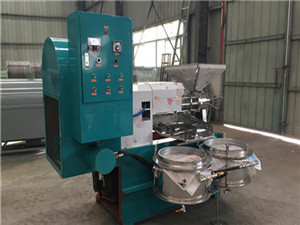
Modern screw presses require staged pressure application rather than constant pressure. The optimal pressure gradient follows a sigmoidal curve: initial compression at 8-12 MPa, followed by main pressing at 25-32 MPa, and final pressing at 18-22 MPa. This three-stage approach reduces acid value by up to 0.8 mg KOH/g compared to constant pressure methods, while increasing yield by 2-3%.
Controlled heating is essential for optimal oil flow without compromising quality. The ideal temperature profile shows 55-60°C at the feed zone, rising to 105-110°C in the pressing zone, and cooling to 70-75°C at discharge. Temperature fluctuations exceeding ±3°C can increase free fatty acid content by 12-15% and reduce oxidative stability by 20%.
Raw material variability demands adaptive process control. A case study from a leading Asian oil mill demonstrated that implementing dynamic parameter adjustment based on real-time peanut analysis resulted in: 30% reduction in unit能耗 (energy consumption per unit), 2.4% increase in oil yield, and 40% reduction in quality variability across production batches.
Sensor accuracy directly impacts process control. Pressure transducers should be calibrated monthly, with acceptable drift tolerance of ±0.5 MPa. Thermocouples require quarterly calibration to maintain ±1°C accuracy. Seal maintenance is equally critical—worn seals can increase energy consumption by 12% and allow contamination risks.
Transitioning from experience-based to data-driven operations involves documenting parameter ranges for different raw material conditions, creating visual workflow charts, and implementing operator training programs. mills that successfully implement standardized SOPs typically see 25% reduction in human error and 35% faster operator training times.
Ready to achieve consistent export-quality peanut oil while reducing operational costs? 企鹅集团 (Penguin Group)'s intelligent pressing control systems combine real-time monitoring with adaptive algorithms to maintain optimal parameters regardless of raw material variations.
Get Your Custom Parameter Optimization PlanOur technical team provides on-site calibration, operator training, and ongoing support to ensure long-term production stability.
As global markets demand increasingly consistent quality, the difference between market leaders and followers lies in how effectively production parameters are managed. Moving from reactive adjustments to proactive, data-driven control transforms variability into reliability, creating a sustainable competitive advantage in the international edible oil market.
 372
|
372
|
 peanut oil refining equipment
energy-efficient oil processing
smart oil extraction technology
automated peanut oil production line
green food machinery
66
|
peanut oil press machine selection
energy-saving oil press maintenance
oil press technical specifications
green intelligent oil extraction equipment
small and medium oil processing equipment
74
|
peanut oil press machine maintenance
oil press machine troubleshooting
energy-efficient oil press
peanut oil extraction equipment
industrial oil press optimization
35
|
cold press peanut oil technology
hot press peanut oil process
energy-efficient oil refining equipment
peanut oil production line selection
smart粮油 machinery
259
|
peanut oil production line
energy-saving optimization
intelligent control system
small and medium oil mills
equipment installation and commissioning
peanut oil refining equipment
energy-efficient oil processing
smart oil extraction technology
automated peanut oil production line
green food machinery
66
|
peanut oil press machine selection
energy-saving oil press maintenance
oil press technical specifications
green intelligent oil extraction equipment
small and medium oil processing equipment
74
|
peanut oil press machine maintenance
oil press machine troubleshooting
energy-efficient oil press
peanut oil extraction equipment
industrial oil press optimization
35
|
cold press peanut oil technology
hot press peanut oil process
energy-efficient oil refining equipment
peanut oil production line selection
smart粮油 machinery
259
|
peanut oil production line
energy-saving optimization
intelligent control system
small and medium oil mills
equipment installation and commissioning









.jpg?x-oss-process=image/resize,m_fill,h_800,w_800/format,webp)


